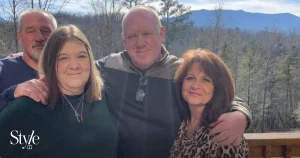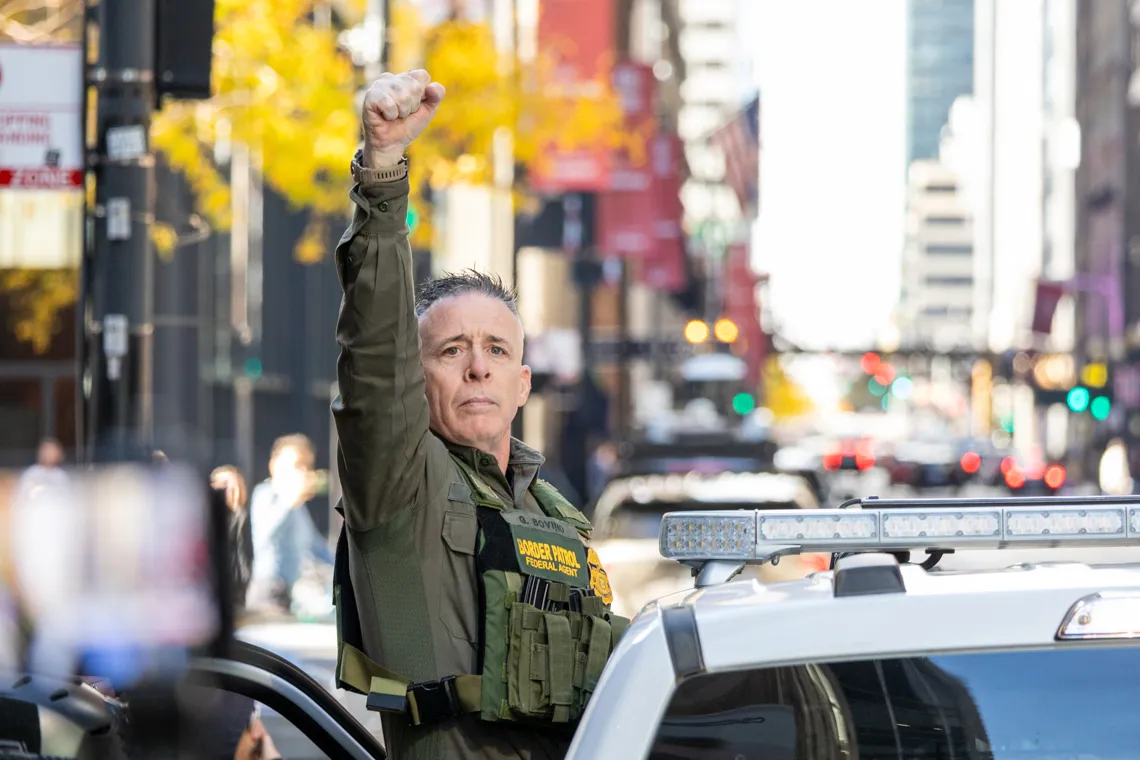
Gregory Bovino’s house in El Centro, California, sits under constant guard. Four Border Patrol vehicles park nearby, agents watching around the clock. When journalists approached recently, his wife answered the door—and declined to comment.
That silence tells you everything about the Bovino family’s approach to the spotlight. While Gregory, 55, has become the face of Trump’s mass deportation operations, his wife and children remain completely out of public view. In fact, next to nothing about his immediate family is available online.
An Immigration Story of His Own
Like the migrants he now apprehends, Bovino has his own immigration story. His great-great-grandfather, Michele, emigrated in 1909 from Calabria, Italy, to Pennsylvania’s coal country to work as a miner. Michele changed his name to Michael to better assimilate.
His wife and four children stayed behind in Aprigliano before joining him in the mid-1920s and becoming naturalized citizens—building the American life that would lead to their descendants becoming one of the country’s most powerful immigration enforcers.
Gregory Kent Bovino was born in 1970 in San Bernardino County, California, where his father, Michael, served on a military base after being drafted during the Vietnam War. Two years later, Michael and mother, Betty, moved the family to Blowing Rock, North Carolina.
A Childhood Shaped by Toughness and Tragedy
Michael Bovino bought his son his first gun when Gregory was just eight years old, teaching him to hunt rabbits and squirrels in the North Carolina mountains. “He was hard,” Bovino’s sister Natalie said of their late father in an interview last year. “Toughness, hard work that baked in.”
That toughness proved essential. When Gregory was 11, he watched the 1982 action movie The Border at his local cinema, starring Jack Nicholson and Harvey Keitel as border guards.
“Greg was so psyched because he loved the toughness and the values of all these old-timers,” his sister Natalie recalled. “Then he watched it, and the Border Patrol person was a criminal. Greg came home totally pissed about it. Since then, he was like, ‘Dude, I want to do Border Patrol.'”
That movie set his life’s course. But tragedy struck first. In 1981, Michael Bovino killed a young woman when he drunkenly crashed his truck into her car after closing his bar, The Library Club. He served four months in prison for a misdemeanor charge of death by motor vehicle.
The family struggled financially. Michael sold the bar, and three years later, when Gregory was 14, his parents divorced.
The High School Years
At Watauga High School, Gregory joined the wrestling team, though coaches remembered him as lacking the height and strength to excel. Lee Stroupe, one of his old coaches, recalled a young man who “was not bashful” and “liked snakes.”
“He knew exactly where to find a snake,” Stroupe told Minnesota Public Radio. “We don’t have many poisonous ones up here in the mountains, but Greg somehow knew exactly where to find them.”
The Family He Built
According to reports, Bovino married and had children after joining the Border Patrol in 1996. But unlike his very public professional life, his personal life remains shrouded in mystery. He has never spoken publicly about his wife or children in interviews, and they maintain no social media presence.
The only glimpse the public has gotten of his wife came when journalists from WBEZ and the Chicago Sun-Times approached their El Centro home. She answered the door but refused to comment. Border Patrol agents emerged from the guarding vehicles and demanded the journalists’ identification.
A Border Patrol spokesman explained that agents have been protecting Bovino’s house for months, ever since he led a controversial deportation operation in Los Angeles that generated furious protests—and threats against him and his family.
The Cost of Controversy
The threats are serious enough that Bovino’s family requires round-the-clock protection. His aggressive “turn and burn” operations have made him a hero to Trump supporters and a villain to critics.
California Governor Gavin Newsom recently said, “Greg Bovino dressed up as if he literally went on eBay and purchased SS garb,” comparing his masked forces to Nazi secret police.
For his wife and children, these comparisons translate into real security concerns that have transformed their home into a protected compound.
Following His Father’s Footsteps—and Avoiding His Mistakes
In many ways, Gregory has lived the tough, disciplined life his father taught him to value. He joined local law enforcement straight out of college, fulfilling the dream that took root in that movie theater when he was 11. He quickly rose through Border Patrol ranks, serving in tactical units and leading sectors in New Orleans and El Centro.
But he’s also worked to avoid his father’s demons. While Michael Bovino’s drinking led to tragedy, Gregory has built a reputation—controversial as it may be—as a dedicated law enforcement professional who refers to Border Patrol as his “life’s work.”
He calls his fellow agents “the Green Machine” and describes them as family. In a 2021 podcast interview, he said with pride: “The Border Patrol has been my life’s work.”
Yet his actual family—his wife, his children, the people waiting for him at that guarded house in El Centro—remain in the shadows he’s chosen for them.
Looking Ahead
As President Trump considers withdrawing Bovino from Minneapolis following the controversial shooting death of nurse Alex Pretti, questions swirl about what’s next for the border commander.
But one thing seems certain: his wife and children will continue to stay out of the spotlight, living with the protection detail that has become their new normal.
Gregory Bovino may be one of the most public faces of Trump’s immigration policy, but the family that shaped him—and the family he’s built—remain as private as his great-great-grandfather Michele’s journey from Calabria. For the wife who won’t speak to reporters and the children whose names we don’t know, that privacy is worth protecting with armed guards.